I work in sustainability. Strategies, reports, measurements, commitments. All have their place, and I understand why businesses need them.
But increasingly, I find myself returning to a question that sits somewhere behind all this work.
What are we actually trying to sustain?
It sounds straightforward until you begin considering the answer.
Are we trying to protect the natural world? Preserve the conditions that allow people to live well? Sustain our economies, our industries and the lifestyles we've built around them?
Presumably, some combination of all these things.
But what happens when they pull in different directions?
The things we value
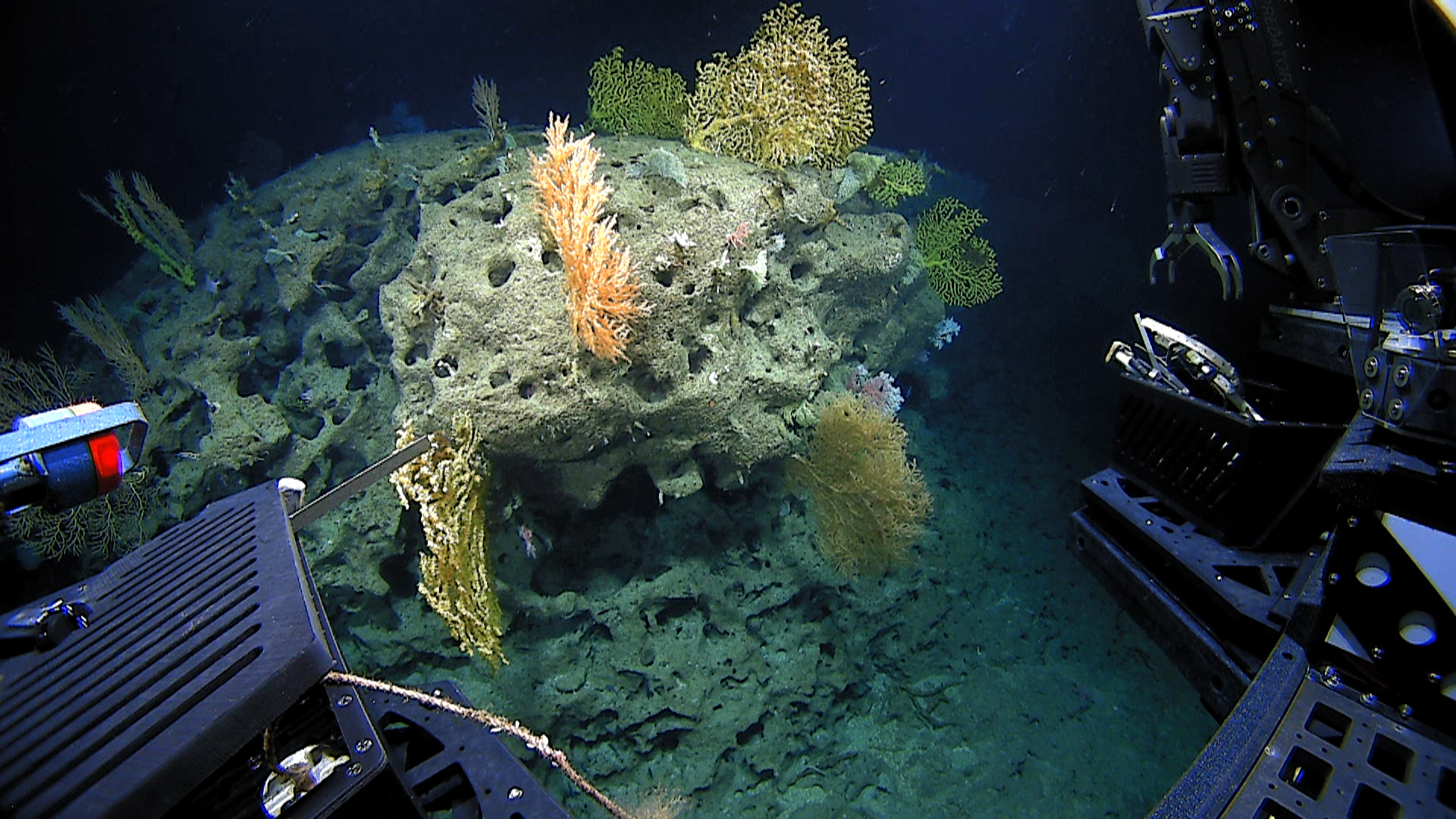
I sometimes imagine a future in which technology allows us to explore the deepest parts of our oceans as easily as we explore places on land today.
What would we find?
Would we discover extraordinary marine life and ecosystems that have continued to flourish? Or would we encounter the accumulated waste and damage left behind by generations before them?
It's not a prediction. Just a thought I find difficult to dismiss.
What interests me is the contrast between our appreciation of the natural world in our personal lives and the activities we sometimes participate in that may threaten it.
Someone working in oil and gas might spend their holidays on a beautiful island, swimming in clear water, watching marine life and enjoying an environment that feels almost untouched.
There's no reason to assume their appreciation is any less genuine than anybody else's.
Yet the economic activities that support our lives can sometimes put pressure on the environments we value.
We can value something deeply without organising our economic behaviour around protecting it.
I find that contradiction more interesting than simply accusing people or businesses of hypocrisy.
Perhaps it tells us something about how difficult it is to connect the things we value as individuals with the decisions we make collectively.
When activity becomes the measure
This brings me back to sustainability work itself.
Organisations have a range of ways to describe their sustainability efforts. Reporting frameworks, commitments, targets, policies and strategies can all help communicate intentions and assess progress.
Much of that is necessary.
Measurement can help us understand a problem. Reporting can establish accountability. A strategy can help organise people and resources around change.
But I sometimes wonder whether, in our efforts to demonstrate sustainability activity, we risk losing sight of a more important question: what is the work actually changing?
A report may identify an environmental risk. A policy may establish an intention to address it. A strategy may outline the actions required.
Those are meaningful steps, but they are not necessarily the same as changing what happens.
The distinction is illustrated by established reporting frameworks.
The IFRS S2 Climate-related Disclosures standard establishes requirements for organisations to disclose information about climate-related risks and opportunities, including governance, strategy, risk management and performance against targets.
The UNFCCC's reporting and review framework similarly supports transparency, accountability and the assessment of progress towards national climate commitments.
These frameworks serve important purposes. But providing information about an activity is not, by itself, proof of environmental improvement.
And that distinction matters.
If a sustainability assessment identifies an opportunity to reduce the environmental impact of a building, what happens next?
Does it influence the materials being specified? Does it change how the building is operated? Does somebody reconsider an investment, a supplier or a procurement decision?
Or does the finding remain in a document until the next reporting cycle?
I don't expect every piece of work to deliver immediate, measurable results. Some decisions take years. Some benefits are difficult to attribute to one intervention.
But I do want to see the work moving towards something.
Because if sustainability work never begins to influence decisions, behaviour or outcomes, I have to question what we're achieving.
Of course, changing a decision is not the same as delivering an environmental improvement. The intended benefits still need to materialise, and sometimes they won't.
But influencing the decisions that determine what happens next is an important place to begin.
The decisions we make for other reasons
There's another aspect of this that interests me.
An environmentally beneficial decision doesn't necessarily begin with an environmental motive.
A business might invest in energy-efficient equipment because operating costs are rising. Other businesses might examine material waste or reconsider how a building operates for similar commercial reasons.
These are examples of decisions that could be made for commercial reasons.
The environmental results will depend on what actually changes. The International Energy Agency's analysis of industrial energy efficiency specifically supports the potential cost, energy and emissions benefits of energy-efficiency measures. It also examines productivity and competitiveness benefits.
The IEA highlights financial barriers, including upfront investment costs and businesses' preference for shorter payback periods.
This interests me because it shows how commercial and environmental considerations can sometimes reinforce one another.
An environmentally beneficial outcome doesn't become less valuable simply because sustainability wasn't the original motivation.
In some circumstances, commercial interests and environmental protection reinforce one another.
In others, they don't.
An environmentally preferable option may sometimes require additional investment, longer payback periods or changes that are difficult to justify using conventional commercial measures.
And the costs and benefits do not necessarily fall on the same people.
That is where sustainability becomes considerably more complicated than identifying opportunities for efficiency.
If we rely entirely on commercial incentives, we may achieve the changes that make financial sense while leaving other necessary changes unaddressed.
But if we ignore the financial realities businesses face, we risk proposing changes they may be unwilling or unable to implement.
Neither position offers a complete answer.
What are we protecting, and for whom?
The language of sustainability can sometimes make its objectives sound more settled than they really are.
We speak about sustainable businesses, sustainable development, sustainable economies and sustainable lifestyles.
But sustaining one thing may create pressures elsewhere.
Protecting an ecosystem can affect local livelihoods. Developing infrastructure can support human wellbeing while placing pressure on natural environments. Improving the efficiency of an industrial process may reduce one impact without eliminating others.
The IPCC's Sixth Assessment Report, Working Group III, Chapter 3 examines how climate mitigation can create both benefits and trade-offs across economic development, human wellbeing, biodiversity and other sustainable development objectives.
The assessment makes clear that these relationships depend on context and that benefits and burdens do not necessarily fall equally across people and places.
The challenge is not simply to demonstrate that an action is sustainable according to a particular measure. It is to understand what that measure tells us, what it leaves out and whose interests are affected.
Which brings me back to the original question.
Are we trying to sustain the natural systems on which life depends?
Are we trying to sustain human prosperity?
Or are we sometimes trying to sustain the economic arrangements and expectations we've become accustomed to, even when those arrangements contribute to the problems we're attempting to address?
I don't think those objectives must always be in conflict.
But I do think we need to be more willing to recognise when they are.
And we need to be clear about what we're choosing to protect.
A question worth keeping open
I don't want this to become an argument against sustainability reporting, corporate commitments or the work being undertaken by people trying to improve things.
I work in this field. I understand that progress can be slow, complicated and difficult to measure.
I also know that some valuable work involves establishing the conditions for decisions that may not be made until much later.
But I believe sustainability work must ultimately contribute to meaningful change.
Not necessarily immediate change. Not always change that can be neatly attributed to one report, one policy or one person.
But a credible movement towards something better.
Perhaps that means paying closer attention to the decisions our work influences, rather than only the activities we can demonstrate.
Perhaps it means recognising environmental improvements wherever they occur, even when they arise from ordinary commercial decisions rather than explicit sustainability commitments.
And perhaps it means being more precise about what we are trying to protect, particularly when doing so requires us to question things we would otherwise prefer to preserve.
I return to that imagined future beneath the ocean.
I wonder what people will find, what they will understand about the choices we made, and whether they will recognise the things we thought were important.
We have developed many ways of describing what we're doing about sustainability.
I think we need to remain just as interested in what we're actually sustaining.
Source notes
- S1 · IFRS - IFRS S2 Climate-related Disclosures — IFRS Foundation
- S2 · Reporting and Review | UNFCCC — UNFCCC
- S3 · Designing and implementing SDG‑oriented industrial policies: Industrial Policy for the Sustainable Development Goals | OECD — OECD
- S4 · Disclosing information about an entity's climate-related transition, including information about transition plans, in accordance with IFRS S2 — IFRS Foundation
- S5 · Executive summary - Global Hydrogen Review 2024 - IEA — IEA
- S6 · Unlocking the potential of energy efficiency - Gaining an Edge - IEA — IEA
- S7 · The effect of climate policy on innovation and economic performance along the supply chain | OECD — OECD
- S8 · Chapter 3: Mitigation pathways compatible with long-term goals — IPCC